How Many Horses Are There in Australia? (2025 Industry Report)
In this 2025 industry report, we break down estimates of the horse population in Australia, covering both domestic and feral (brumby) populations.
How Many Horses Are in Australia? The Breakdown
As of 2025 we approximate that there are 1.4 million horses within Australia. This number includes 1 million domestic and racing horses as well as 400,000 in feral numbers. Although there a significant gap when estimating the scale and location of national domesticated horse populations.
It is commonly accepted estimate is around 1,000,000 demestricated horses in Australia. However a report by Agriculture Victoria estimates that these numbers may vary between 500,000 and 1.4 million.
The reason for poor data is laregely due to no existence of a national registry, making estimations difficult.
Where the estimates come from
In 2009 a survey of horse owners through the Australian horse industry council created the estimate of 1,000,000 domesticated horses, based on the below data:
- Equestrian Australia reported 59,097 registered horses across the equestrian sector.
- Australian Horse Industry Council's (AHIC) member groups account for 340,000 registered horses. Horse Traceability Systems 14
- The Australian Stud Book has 1.2 million records that include current and historical horses which are likely to include horses that are still alive but that have left the racing industry and horses that are dead.
- The NSW Department of Planning, Industry and Environment (DPIE) informed the committee that in 2018 it was estimated that the state had 97,000 horses, but NSW DPIE considers this figure a massive underestimation.
How many wild horses in Australia
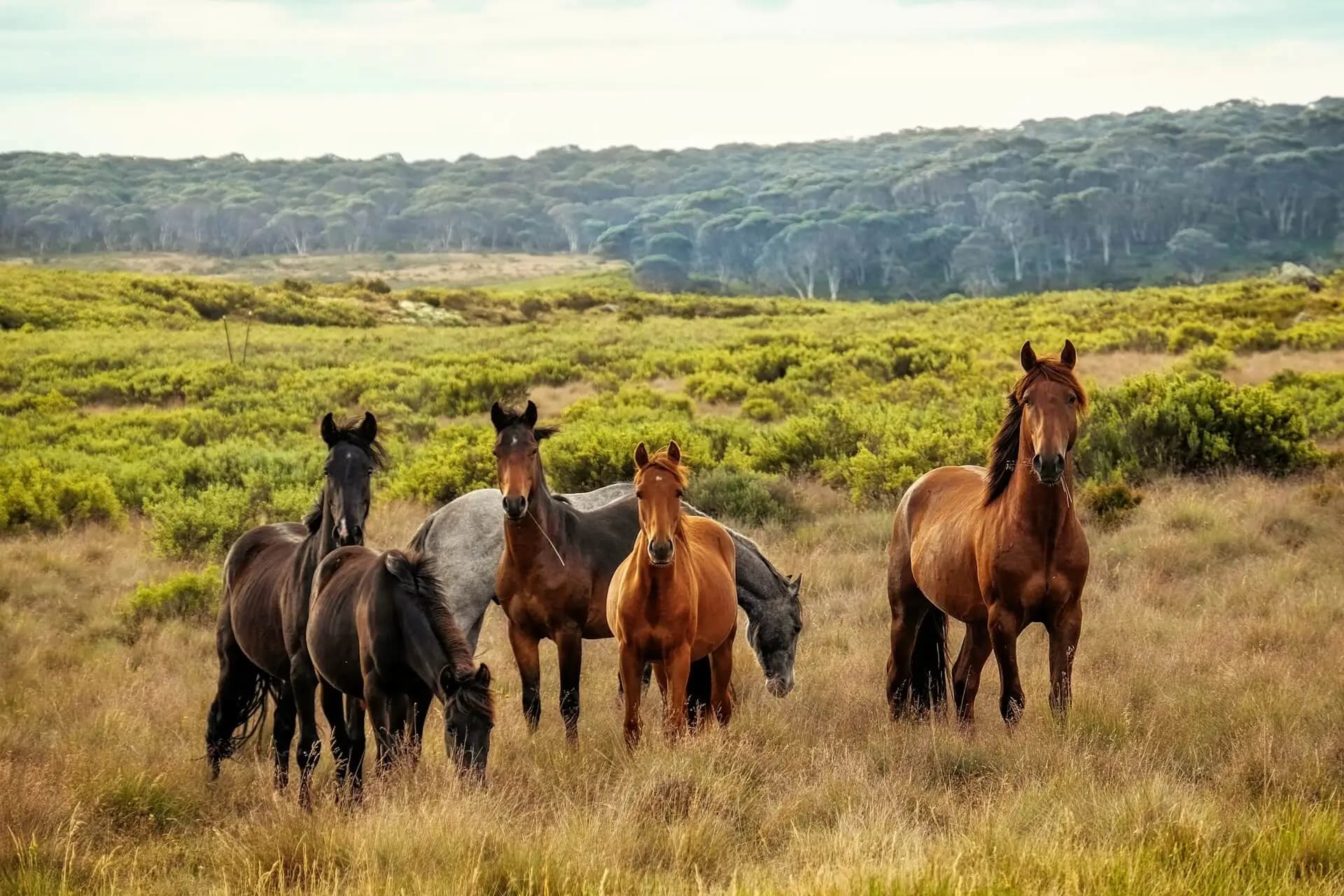
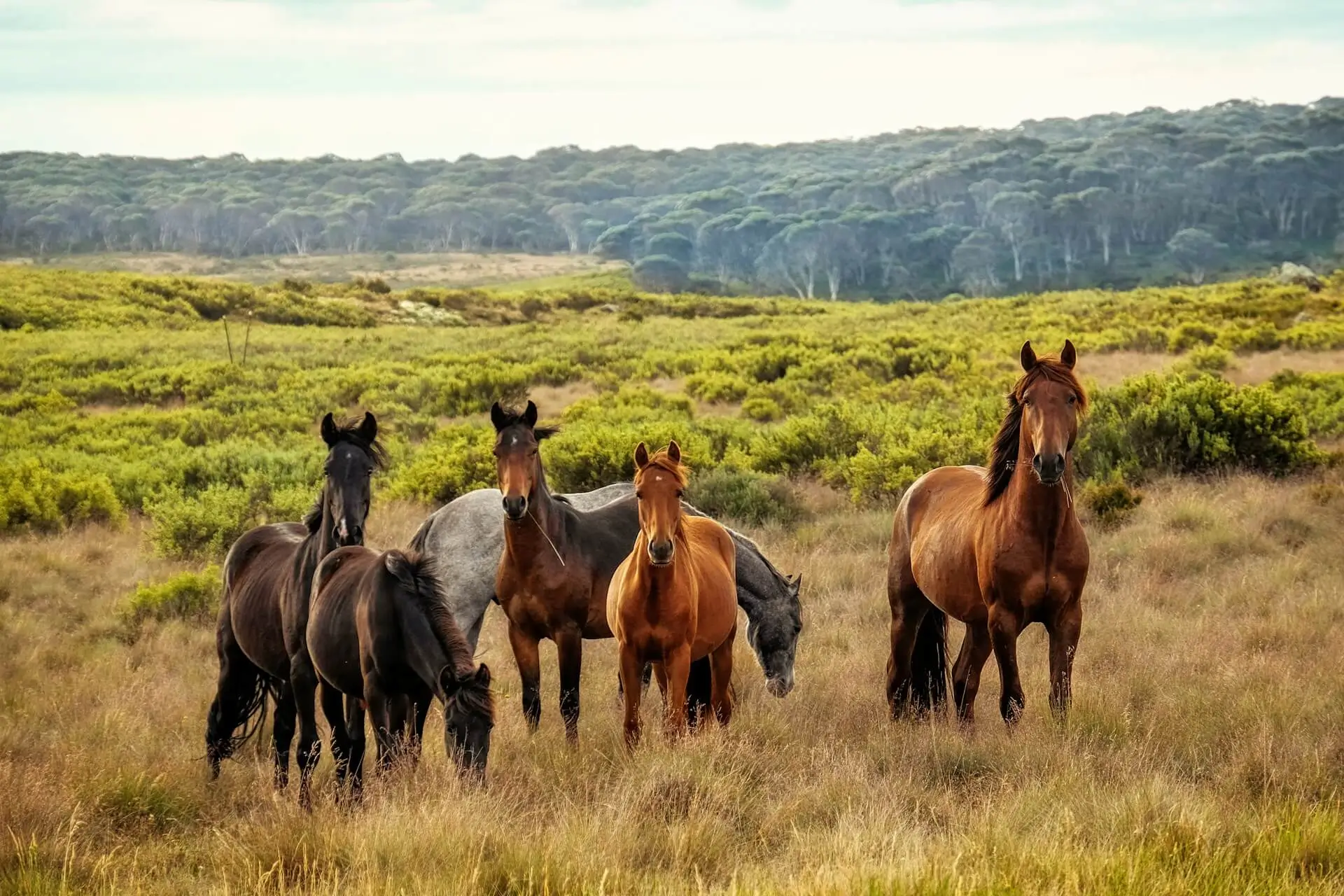
In addition to domestic horses, Australia is also known for its large populations of feral horses, commonly called brumbies. It is estimated that Australia has around 400,000 feral or wild horses. This data comes from the invasive species council Australia has the largest wild horse population in the world.
Feral horse populations are now established in more than ten conservation areas across NSW, including iconic sites such as Kosciuszko National Park and World Heritage–listed regions of the Blue Mountains, Barrington Tops, Guy Fawkes, and Oxley Wild Rivers national parks. Kosciuszko National Park faces the greatest pressure, with NSW’s largest population of feral horses threatening its fragile and unique alpine environment.
When Were Horses Introduced in Australia?
Horses were first introduced to Australia in 1788, arriving with the First Fleet at Sydney Cove. Only a small number were brought over, mainly for transport, farming, and utility work. Over the following decades, more horses were imported, especially from India, South Africa, and England, to meet the growing needs of the colony. By the 19th century, horses had become essential to Australian life—used for farming, exploration, transport, and military purposes.
Why Were Horses Introduced in Australia?
Horses were introduced to Australia primarily for practical reasons. Early settlers needed them for:
-
Transport: Horses provided the fastest and most reliable way to travel long distances.
-
Farming and work: Horses were vital for ploughing fields, herding livestock, and pulling carts.
-
Military use: Horses became crucial for cavalry and mounted units, particularly during conflicts such as the Boer War and World War I. Over time, horses also became central to recreation and sport, with horse racing growing into one of Australia’s most popular pastimes.