Horse Lunging Explained: Purpose, Benefits, and How to Lunge Your Horse
A complete guide to horse lunging, including its purpose, benefits, equipment, techniques, and safety tips for Australian horse owners.
Horse lunging (often spelled lungeing) is a foundational groundwork exercise where a horse moves in a circle around the handler. The handler stands in the center of the circle holding a long lunge line attached to the horse’s bridle or cavesson, and usually carries a lunge whip to guide the horse’s pace. As one guide explains, “Lunging a horse is a training technique where the horse is asked to move in a circle around a rider. The rider holds a lunge line attached to the horse’s bridle … and uses a lunge whip to direct the horse’s movement.” farmhousetack.com. Lunging is commonly done in an arena or round yard. It is a controlled exercise – not a race – used for training, fitness, and bonding rather than simply “letting the horse run wild.” In dressage and sport training, lunging builds** balance, flexibility, and strength** by having the horse move at various gaits in a circle.
Why Lunge a Horse? Benefits and Purpose
Lunging serves many purposes in a horse’s training plan. It helps a young or inexperienced horse learn to carry tack and respond to commands before a rider mounts, and it provides exercise and mental focus to horses of all ages. As one trainer notes, lunging can familiarize a horse “with the weight of the equipment, learn to move with tack on, wear a bridle and bit, and understand early training commands.” - farmhousetack.com. More generally, regular lunging is a versatile conditioning and warm-up tool:
-
Builds fitness and muscle. Working a horse in a circle at walk, trot, and canter improves cardiovascular endurance and strengthens hindquarters and topline muscles. Racing Queensland reports that a correct 20minute lunge session can provide the same workout as 45–60 minutes of ridden workracing.
-
Improves balance and coordination. Lunging encourages the horse to balance itself on the circle, developing coordination especially in young or green horses still learning to carry weight. In classical dressage training, this helps develop both longitudinal (fore-aft) and lateral (side-to-side) balance.
-
Enhances suppleness and flexibility. Repeated transitions and changes of bend on the lunge help the horse stretch muscles and become more supple.
-
Mental stimulation and focus. Lunging keeps high-energy horses mentally engaged. Introducing varied exercises (like trot–canter transitions or ground poles) prevents boredom. It also gives the horse a chance to focus on the handler’s cues rather than distractions. As one coach observes, a good lunging session “sharpens [the handler’s] ability to interpret equine cues” and helps the horse remain attentive to the handler’s body language.
-
Assessment of soundness and behavior. Lunging lets you observe the horse’s natural gaits and identify any lameness or stiffness. It also teaches basic obedience (e.g. stop, walk on) on the ground. Trainers often mention that lunging gives the horse clear experience yielding to pressure; for example, understanding that turning or stopping on the lunge comes from moving the shoulders or hindquarters away from the handler’s signals.
Importantly, lunging is not just “wearing out” a horse. Equine experts warn that the goal should not be to exhaust your horse on the lunge. “The purpose of lungeing is not to ‘wear out’ the horse,” the Pony Club Australia manual explainsponyclubaustralia.com.au. In fact, letting a horse “rip around” can have the opposite effect. Research notes that giving a horse free rein often “winds him up like a top,” making him more excited or tensehorsejournals.com. Instead, keep lunging structured and calm. Riders should think of lunging as active training time, not playtime, so that the horse stays relaxed and responsive.
Importantly, lunging is not just “wearing out” a horse. Equine experts warn that the goal should not be to exhaust your horse on the lunge. “The purpose of lungeing is not to ‘wear out’ the horse,” the Pony Club Australia manual explainsponyclubaustralia.com.au. In fact, letting a horse “rip around” can have the opposite effect. Research notes that giving a horse free rein often “winds him up like a top,” making him more excited or tensehorsejournals.com. Instead, keep lunging structured and calm. Riders should think of lunging as active training time, not playtime, so that the horse stays relaxed and responsive.
Equipment and Setup for Lunging
Before you begin, gather the proper tack and choose a safe location. Key equipment includes:
-
Lunge line: A long, sturdy rope or webbing line (usually 6–8 meters) attaches from the handler’s hand to the horse’s bridle or cavesson.
-
Lunge whip: Not for hurting the horse, but to encourage forward motion. It acts like your leg aids from the ground.
-
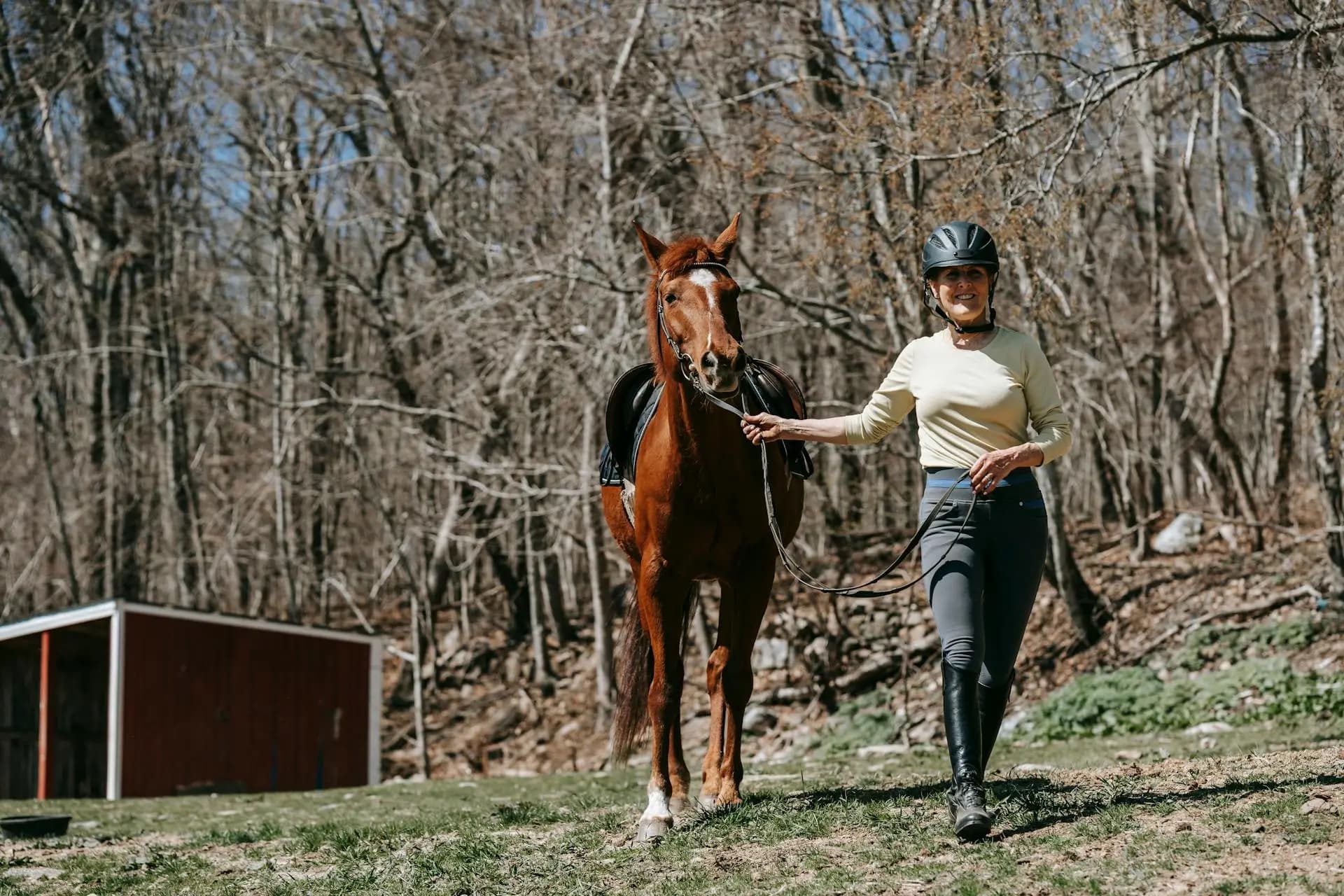
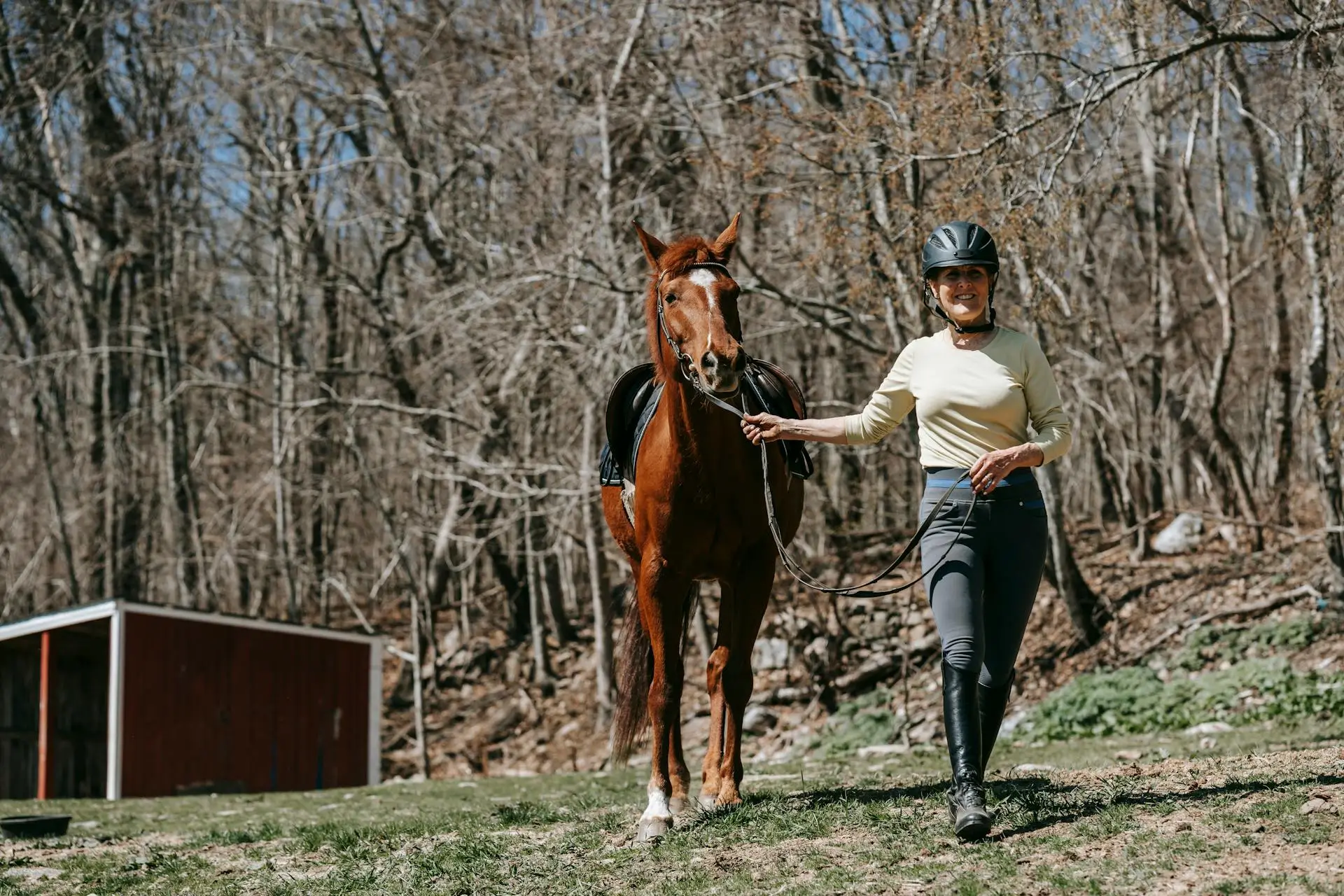
Headgear: A bridle or lunging cavesson (a padded halter with rings) gives good control and even pressure. Do not lunge in a plain halter if you want safe control. As Racing Queensland notes, lunging in just a rope or nylon halter “can pull over the horse’s outside eye and does not allow for good control,” so they advise always using a proper bridle or cavesson. In other words, the picture here (above) with a simple halter is a common mistake – you have very little control that way. A dedicated cavesson or bridle setup ensures your horse stays safe and responsive.
-
Protective gear: Many handlers use leg wraps or boots on the horse’s legs to prevent strain from repeatedly going in circles. The handler should wear a solid boot (to protect the foot) and a riding helmet and gloves to stay safe (PCA guidelines also require this). At no point should the handler wear spurs when lunging, as the Pony Club cautions that spurs can catch on the line or the footing.
Choose an appropriate lunge space. A quiet, fenced arena or round yard with soft, even footing is ideal. The circle should be large enough to keep the horse balanced – typically 10–15 meters in diameter for a beginner horse. (Very fit, experienced horses can handle smaller circles around 8m, but tiny circles should be avoided: if the horse’s nose is pinched too far inward on the circle, it’s a sign the circle is too small). Clear the area of debris, holes or obstacles and make sure other horses or traffic can’t spook your horse. In Australia especially, always confirm any local rules for lunging (for example, at shows or polo grounds) and ensure dogs or nearby horses won’t cause distractions.
In short: prep your horse and environment carefully. Let your horse see and sniff the line and whip before you start, and make sure he’s sound and warmed up. Lunging an injured or overly tired horse is not recommended. Once ready, position yourself on the center of the circle, face the horse, and hold the lunge line in one hand (with some slack but not dragging on the ground) and the whip in the other.
How to Lunge a Horse: Step-by-Step
Follow these steps for a safe, effective lunging session. Make sure to use clear voice commands (e.g. “walk,” “trot,” “canter,” “whoa”), and rely on the lunge whip only as a cue rather than hitting the horse.
- Establish Position. Stand at the center of the circle (imagine yourself at the tip of a triangle, horse at the base, the lunge line and whip as sides)(source: farmhousetack.com). If you will lunge to the left, hold the line in your left hand and whip in your right; reverse hands when changing direction. Keep your shoulders back and head up. Always stay roughly aligned with the horse’s shoulders – stepping in front of the horse’s “driveline” (shoulder line) can confuse the horse and cause it to stop or turn towards you. If the horse does come in toward you, move slightly to its side and raise your whip arm to send it back out on the circle (this is similar to creating the sideways pressure used in turning on the ground).
- Ask for Walk. Using a gentle voice cue (or light touch of the whip on the horse’s rump), encourage the horse to walk forward on the circle. Keep the line loose until the horse starts moving, then maintain contact to guide the circle. Allow the horse to find a steady rhythm at the walk first; this warms up muscles and helps the horse understand the task.
- Transition to Trot/Canter. Once the horse is comfortable walking, ask for the next gait. Typically, you say “trot” or “canter” and give a tap with the whip if needed. The whip mimics your leg, urging the horse forward into the faster gait. Keep the circle steady. Watch that the horse doesn’t hollow or lean on the inside shoulder; if it does, circle size or speed may need adjusting. If the horse responds well, allow a few laps at trot (and eventually canter) for training.
- Circle Changes. After working on one direction (usually counter-clockwise first, as many horses prefer), change direction to keep training balanced. You can bring the horse to a halt, then reverse the line of travel. Balanced training on both reins is important to prevent muscle or flexibility imbalances.
- Transitions and Stops. Practice transitions: trotting to walking, cantering back to trot, etc. Use calm, clear cues and release pressure when the horse obeys. A firm “whoa” (usually a drawn-out voice command) should halt the horse. If the horse is reluctant to stop, slide the whip handle inwards towards its hindquarters – this often cues a halt. Conversely, if the horse drifts too much inward, push out slightly to encourage circling.
- Cool Down. Finish the session with a relaxed walk until the horse is breathing down and moves quietly on the circle. This helps muscles relax gradually. Do not end lunging with the horse in a frenzy; always reward calm, attentive behavior (a pat or treat) to reinforce positive learning.
Each of these steps should be executed patiently and consistently. For a visual reference, think of yourself slightly behind the horse’s shoulder, wrist raised, sending it into the circle. If the horse continually breaks gait or spins, stop the circle, reset its position, and try again. The goal is a horse that moves obediently away from the handler around the circle, not one that rushes or refuses.
Common Mistakes to Avoid
Lunging has a learning curve. Here are common pitfalls and how to fix them:
- Chasing the hindquarters. Some beginners think lunging means running at the horse’s rear. Instead, remember how pressure and avoidance work: if you approach a horse’s hind end, it will move forward (away). If you approach its shoulder, it should step its shoulder away, causing it to start circling. Proper shoulder yielding is key. Always avoid stepping behind the horse; push at its shoulder to keep it moving outward.
- Incorrect use of tack. As noted, lunging a horse in a simple halter is not recommended. The picture above demonstrates this mistake: the handler has virtually no leverage. Use a well-adjusted cavesson or bridle. If you must start a green horse in a halter for a short time, do it only at walk and switch to a bridle/cavesson as soon as possible. Handler movement confusion. Keep your own body steady. When you’re lunging correctly, the horse should move around you, not vice versa. If you find yourself constantly pivoting or walking in large circles, the horse will become confused. Lock onto your spot in the center and use only your arm and body position to apply cues. (A helpful mental image: stay on the tip of a “pie slice” – you at the point, horse at the crust.)
- Over-exciting the horse. Lunging is training, not a race. Don’t wave the whip unnecessarily or shout. If the horse is rushing or spinning in, you may be overstimulating it. Instead, maintain a calm stance. Pony Club guidelines explicitly say lunging “sometimes allows the expression of the flight response” if done poorly. If the horse is tense or acting wild, stop and walk him until he settles. Remember the advice from trainers: repeatedly letting a horse “get it out of its system” by running hard will only make him more wound-up.
- Excessive lunging duration or circle size. Lunging should be brief – typically 20–30 minutes total, including warm-up and cool-down (Racing Queensland suggests 20 min equals nearly 1 hr of ridden work). Don’t over-lunge a tired horse. Also, keep circles reasonably large. The Pony Club manual warns against small circles at faster gaits (they can damage joints)ponyclubaustralia.com.au. Start with a 10–15m diameter circle on a walkponyclubaustralia.com.au and only shorten it gradually as the horse’s training progresses.
- Lack of variety. Lunging only at fast pace or only letting the horse gallop is also a mistake. Many novices turn the horse loose and just “let it burn off energy,” but that teaches the horse to expect galloping whenever it’s lunged. Instead, vary your exercises: include walk-halt, trot-canter transitions, and change of direction. This makes the work purposeful and keeps the horse paying attention. By avoiding these errors and building good habits, lunging becomes a productive tool rather than frustration.
Do Horses Enjoy Lunging?
Horses cannot “enjoy” an activity in human terms, but they will respond positively if lunging is done in a clear, calm way. A well-handled lunging session should be quiet and purposeful. If a horse frequently tries to come in toward the handler, it usually means he’s unsure of the signals or the pressure – not that he’s rebelling. In that case, go back to groundwork basics: teach him to yield shoulders and hindquarters from pressure on the line before circling.
On the other hand, a horse that reacts excitedly every time the lunge whip is cracked may be getting the wrong message. Equine experts note that lunging shouldn’t be a cue to “go crazy.” In fact, research indicates that “letting a horse rip around and ‘get it out of his system’… only winds him up like a top” - horsejournals.com. Horses generally prefer structure: they become more relaxed when they know what’s expected. So keep lunging sessions short, consistent, and ended with the horse calm. Always reward or gently stroke a horse when he responds well (for example, after a correct halt or a good steady trot). In summary, horses typically do fine with lunging as long as it’s done respectfully. It provides activity and human interaction. Just remember it is work, not play. The better the communication and timing from the handler, the more the horse will move willingly. Many trainers find that a horse that lunges well tends to go better under saddle, since the horse has learned to listen on the ground first.
Additional Tips and Safety
- Safety first: Never wrap the lunge line around your hand or body. Hold it loosely in a loop or coil so you can quickly drop or release it if the horse bolts. Gloves help prevent rope burn.
- Footing matters: Work on soft but firm footing (sand arena or grass). Hard, uneven or slippery ground can injure the horse if he stumbles on the circle.
- Eye on the horse: Keep observing the horse’s form. A headset slight flexion or consistency in gait is a sign he understands you. If he bulges at the neck or pokes the nose out on the circle, he may be resisting or uncomfortable – adjust your approach.
- Wear protection: The handler should wear a helmet and sturdy boots. Australian Pony Club rules explicitly require a compliant helmet and boots even when lunging.
- Keep sessions routine: Try to keep lunging sessions regular (2–3 times a week for young or high-energy horses; once a week may suffice for a mature, well-trained horse). Consistency helps the horse learn expectations.
- Record and review: If possible, have someone video you lunging. Seeing your technique can help catch issues (like walking in front of the horse or uneven circles). For Australian riders, lunging is a skill often taught at Pony Club and riding schools. If you’re unsure, consider taking a lesson or asking an experienced trainer to watch you. They can help fine-tune your position and cues.
Horse lunging is a fantastic tool for ground training, fitness, and safety. Used wisely, it strengthens your communication with your horse and prepares both of you for riding. With the right gear, clear commands, and patience, lunging can become a routine that your horse accepts calmly – and you will see the benefits in his improved fitness, balance, and attention.